
Gas springs, also known as gas struts or dampers, are essential components in various mechanical applications, from automotive systems to furniture and industrial machinery. They provide controlled motion, ensuring that mechanisms move smoothly, safely, and efficiently. With so many types and variations of gas springs available on the market, it’s crucial to choose the right one for your specific application. In this article, we will discuss how to select the ideal gas spring for your needs, considering key factors such as force, stroke length, mounting options, and environmental conditions.
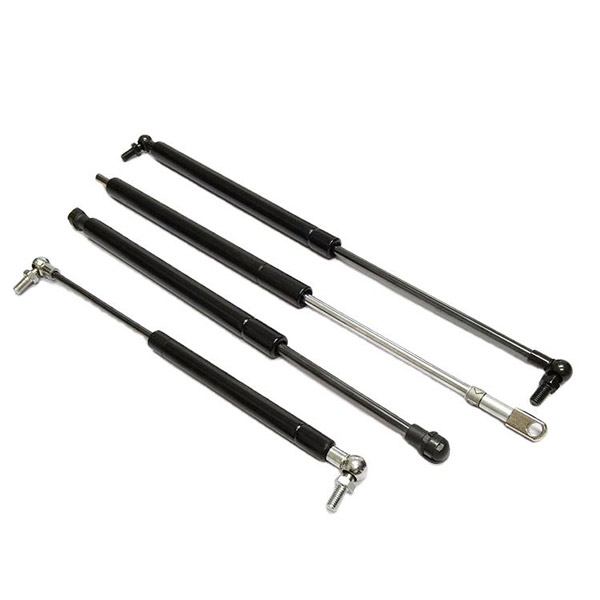
A gas spring consists of a cylinder filled with nitrogen gas and a piston inside. When compressed, the gas creates a force that pushes the piston, providing a lifting or dampening effect. Gas springs are designed to control the speed and force of movement, making them essential for applications requiring smooth, consistent motion and controlled force.
Gas springs are widely used in various industries, including automotive, aerospace, furniture, medical devices, and heavy machinery. They are found in applications such as car hoods, office chairs, industrial machinery, lifting systems, and even medical bed adjustments.
Key Factors to Consider When Choosing a Gas Spring
Selecting the right gas spring for your application requires understanding several critical factors. Below, we break down the most important aspects to consider when making your decision.
1. Force Requirements
The force of a gas spring determines how much lifting or damping power it can provide. Choosing the right force is crucial to ensure proper functionality and safety. Gas springs are available in a wide range of force options, and selecting the correct one depends on the weight and size of the object being moved or supported.
To determine the required force, you must consider the weight of the object and the angle at which the gas spring will be mounted. The force is typically measured in newtons (N), and it’s essential to select a gas spring that provides enough support without overextending or underperforming.
For example, in an automotive application, the gas spring for a car hood must have sufficient force to lift the hood and hold it open. In contrast, a gas spring for an office chair needs a lower force to allow for smooth adjustments in height.
2. Stroke Length
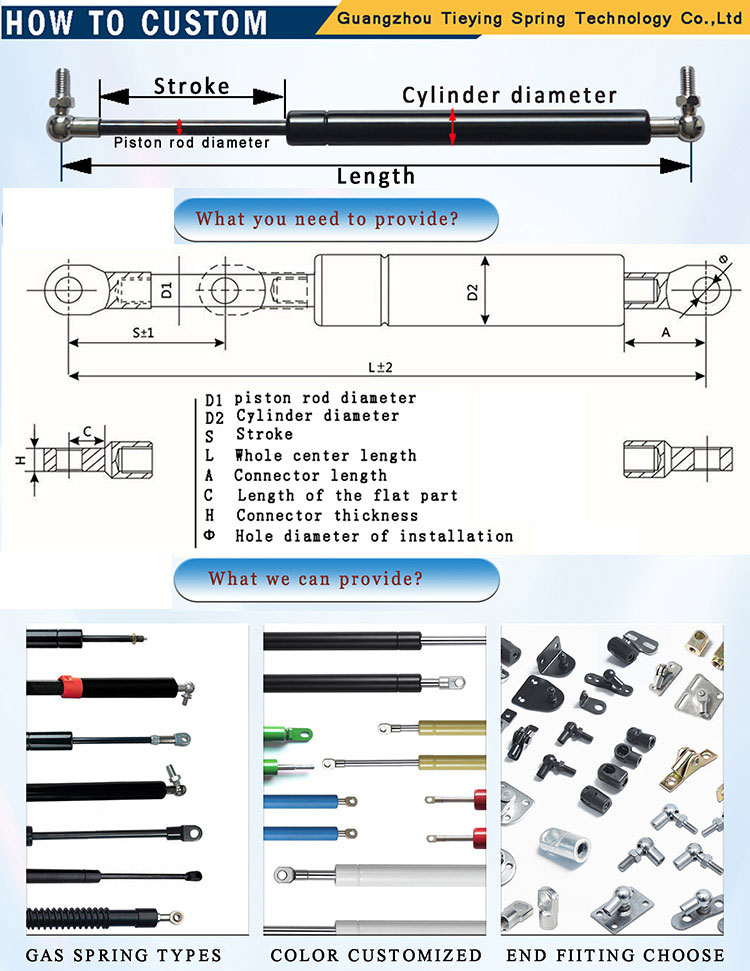
The stroke length refers to the distance over which the piston of the gas spring moves. The stroke length is determined by the amount of travel required in the application, whether it is for lifting, lowering, or damping motion.
For example, in a medical bed application, the stroke length would need to be long enough to allow for smooth adjustment of the bed’s angle, while in an automotive hatchback system, a shorter stroke length might be sufficient.
When selecting a gas spring, make sure the stroke length matches the required travel distance of the application. Using a gas spring with an incorrect stroke length could result in the mechanism not functioning as intended, leading to operational inefficiencies or safety hazards.
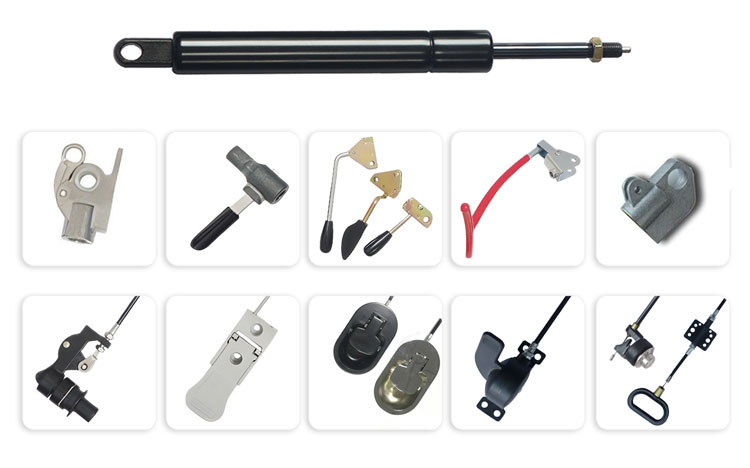
3. Mounting Options
Gas springs come in various mounting styles to suit different applications. The correct mounting position ensures that the gas spring operates effectively and provides the desired motion.
Some common mounting options include:
End Mounting: This is the most common type, where the gas spring is mounted at both ends of the cylinder. It is suitable for applications where the spring needs to push or pull in a straight line.
Side Mounting: In this mounting style, the gas spring is mounted on the side of the mechanism. This option is often used in smaller applications where space is limited.
Clevis Mounting: A clevis-style mounting involves a pin inserted through a hole in the gas spring and the mechanism. This provides greater flexibility in adjusting the positioning of the gas spring.
When choosing a gas spring, it’s essential to ensure that the mounting type matches your application’s requirements. The right mounting option will provide smooth, efficient operation while minimizing wear and tear.
4. Environmental Conditions
The operating environment plays a crucial role in selecting the appropriate gas spring. Gas springs are designed to perform optimally under specific conditions, and harsh environments can affect their performance and lifespan.
Consider the following environmental factors:
Temperature Range: Extreme temperatures can cause the gas spring’s internal components to wear out faster or operate inefficiently. Make sure to choose a gas spring that can withstand the temperature range in which it will operate.
Corrosion Resistance: If the gas spring will be used in a humid or corrosive environment, such as marine or outdoor applications, choose one with a corrosion-resistant coating. Stainless steel or coated gas springs are ideal for environments exposed to moisture, chemicals, or saltwater.
Vibration Resistance: In applications where vibration is present, such as heavy machinery or automotive systems, choose a gas spring that can withstand vibrations without compromising its performance.
Make sure to assess your application’s environmental conditions to ensure that the gas spring you choose is suitable for long-term, reliable operation.
5. Temperature and Load Compensation
Some applications, especially those involving dynamic motion or heavy loads, may experience changes in temperature that can affect the gas spring’s performance. In such cases, selecting a temperature-compensated gas spring can help maintain consistent force across a range of temperatures.
Similarly, for applications with varying loads, load compensation systems help maintain consistent motion, ensuring that the gas spring functions smoothly even when the load fluctuates.
6. Seals and Safety Considerations
Gas springs are sealed units, and the quality of the seals is crucial to their performance. A poor seal can lead to gas leakage, reducing the spring’s force and lifespan. Make sure to choose a gas spring with high-quality seals to ensure long-lasting and efficient performance.
In applications where safety is paramount, such as automotive or medical devices, it’s important to choose gas springs with additional safety features, such as pressure release valves or anti-shock features that prevent damage during high-impact events.
7. Customization Options
While standard gas springs work well for many applications, some industries or use cases require custom-designed solutions. Custom gas springs can be designed to meet specific force, stroke, mounting, and environmental needs. If your application requires specialized features, such as custom fittings or unique force profiles, a custom solution may be necessary.
Many manufacturers offer custom gas spring options, allowing you to tailor the gas spring to your exact specifications.
Choosing the right gas spring for your application requires careful consideration of several factors, including the required force, stroke length, mounting options, environmental conditions, and safety considerations. By evaluating these factors and selecting the most suitable gas spring, you can ensure smooth, efficient, and reliable operation for your application.
Whether you’re in the automotive, medical, industrial, or furniture industry, selecting the right gas spring is critical to achieving optimal performance and longevity. If you need assistance with selecting the ideal gas spring for your needs, consult with a trusted manufacturer or supplier who can guide you through the process and offer customized solutions tailored to your specific application.
TieYing provides full OEM/ODM design and manufacturing for gas springs. You can specify gas spring type, force, stroke length, and mounting position. Send your CAD drawings or performance parameters — we’ll provide a tailored solution within 48 hours. Contact us for a custom quote today by sending an email to tyi@tygasspring.com, we will get back to you within 8 working hours.
Post time: Mar-05-2026